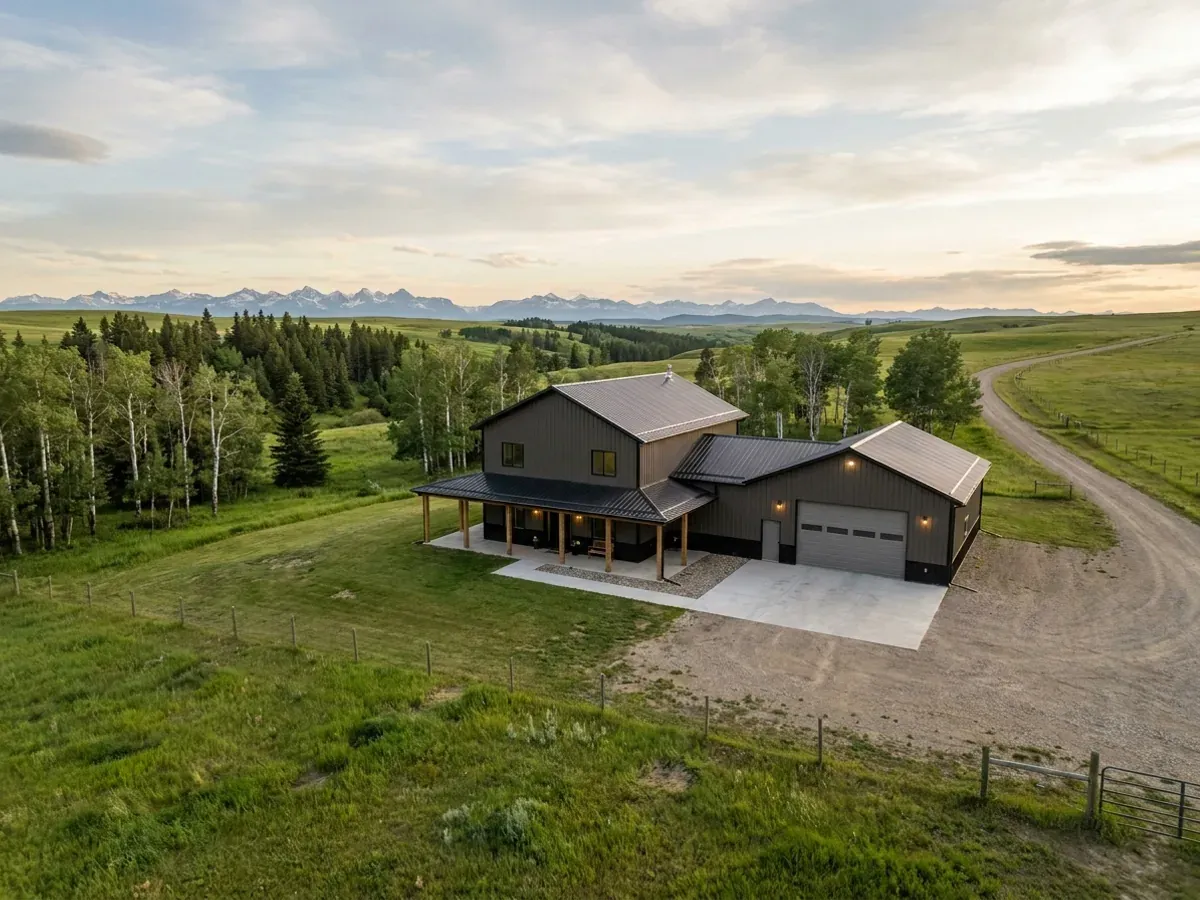
Turnkey Barndominiums in Alberta, Saskatchewan and BC
A turnkey barndominium is built from bare land to a finished, inspected house under one agreement, so you deal with one team instead of coordinating a kit supplier, an erection crew and a dozen trades yourself. We build turnkey barndominiums on acreages across Alberta, and in Saskatchewan and British Columbia. On rural land that team also carries the parts of the job that stall builds: the municipality's development and building approvals, the water supply, the private sewage system, and a house designed for the snow loads and the winter at your site.
What Turnkey Covers
Turnkey means one agreement and one schedule from the site to the keys. We plan the house with you, draw it, apply for the permits, prepare the site, build the foundation, put up the frame and close it in, then insulate and finish the inside. In Alberta, building, electrical, gas, plumbing and private sewage work each need their own permit; licensed trade contractors do the plumbing, electrical and gas work, and we schedule them so the house does not wait on them.
The well and the septic system are specialist work. In Alberta, a licensed water well drilling contractor drills the well, and a private sewage permit can be issued to a certified private sewage installer or to an owner who will live in the house the system serves. In Saskatchewan, water well drilling machines have to be registered with the Water Security Agency, and a septic system needs a permit from the Saskatchewan Health Authority before it is installed. We plan the house around both and fit them into the schedule.
What turnkey does not mean is one fixed price for any house on any land. The land sets a large share of the cost: how far the power has to come, how deep the water is, what the soil will take for a septic field and how much work the access and building pad need. We find those answers first, so the build price is a price for your parcel.
Building Through a Prairie Winter
In Alberta and Saskatchewan the calendar shapes a build as much as the drawings do. Foundations are easiest in frost-free ground, many rural roads carry seasonal weight restrictions in spring, and a house that is closed in and heated before the hard cold can be finished inside all winter. We plan the schedule around those dates rather than discovering them.
If a short time on site matters more than anything, an RTM home built in our yard can be finished while your foundation is being built, and then moved to your land.
We build turnkey in British Columbia as well, and the province has its own rules for anyone who takes on a whole house: a residential builder licence from BC Housing and third-party home warranty insurance of 2 years on materials and labour, 5 years on the building envelope and 10 years on structure, even where no building permit is required. The British Columbia page explains the province's approach, including the Agricultural Land Reserve.
Turnkey Builds: how the work runs
Four stages, in this order. The sequence matters more than it looks: on rural land, settling the land use, the water supply, the private sewage system and the permits before anything is built is what keeps a project from stalling.
Land, water and septic
We start with the parcel: land use, access, the water supply and where the septic field can go. Water and private sewage are the two questions most likely to hold up a rural build, so they are settled first.
Design and permits
We draw the house, fit the frame to it, put the engineered frame and foundation drawings and the energy information into the set, and apply to your municipality for the permits it requires.
Build
Site work, foundation, frame and dry-in, then insulation, interior framing, the trades and finishes. The building official inspects at the stages the permit calls for.
Final and handover
Final inspection, a walk-through with you, and the house handed over with its documents, including the details of the septic system and well you will need for their upkeep.
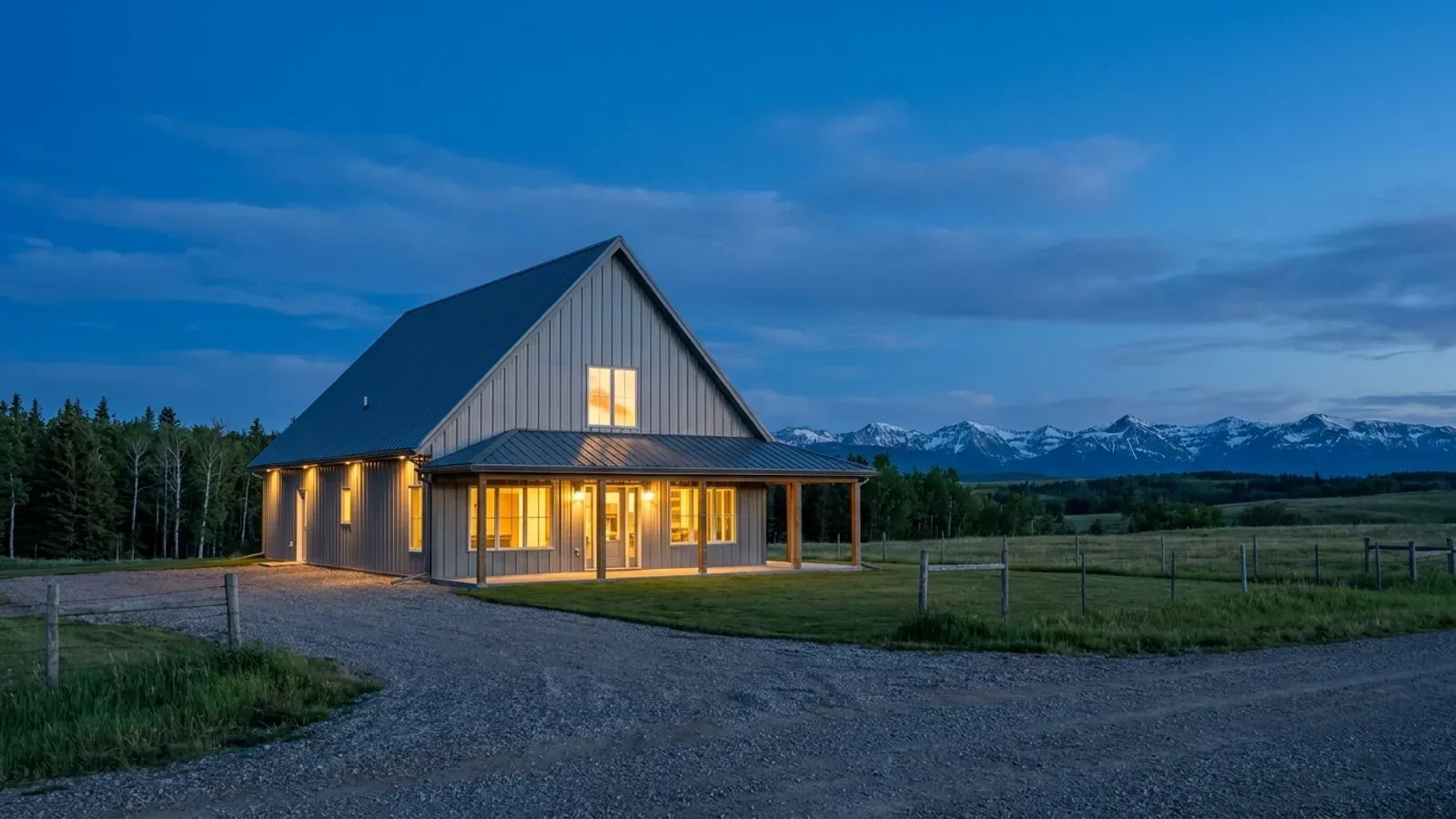
Turnkey starts with the land, not the floor plan
On rural land the questions that stall a build are rarely about the house: they are about water, the septic field, the access and the approvals. A turnkey build answers those first, then builds the house on a schedule that respects the winter.
Where we deliver turnkey builds
Most barndominiums are built on rural land, and there the local government is the first office that matters: an Alberta county or municipal district, a Saskatchewan rural municipality or a British Columbia regional district. Its land use bylaw decides what can go on the parcel. In Alberta the building permit comes from the municipality if it is accredited under the Safety Codes Act, or through an agency working for the province where it is not. In British Columbia the Agricultural Land Reserve limits houses on farmland, and not every regional district provides a building inspection service. The province and city pages set out what each place publishes.
Barndominium builders in Alberta, Saskatchewan and BC.
Every municipality has its own answer on land use, permits, water and septic. The province and city pages set out what each one publishes.
What actually decides the price
Square footage is the number everyone leads with, and it is rarely the one that moves a barndominium budget. These four do.
-
Services to the site
How far power has to be brought in, and whether natural gas is available, can move a rural budget more than the interior finishes.
-
Water and septic
Well depth and yield, or the cost of a cistern, and the type of private sewage system the soil allows vary widely from one parcel to the next.
-
Finish level
Flooring, cabinetry, fixtures and the shop finish are where two houses of the same size end up far apart.
-
Season and schedule
Winter concrete, heating an unfinished shell and spring road bans all add cost when the schedule runs into them.
Turnkey Builds in Western Canada: common questions
8 questions we get asked most often about building in Western Canada. If yours is not on the list, ask it directly.
What does a turnkey barndominium include?
Do you publish turnkey prices?
Do you drill the well and install the septic system?
Does a household well need a water licence?
Can you build through the winter?
How long does a turnkey barndominium take?
Can I do some of the work myself?
What does British Columbia require of a turnkey builder?
Keep reading
The pages that answer the next question this one raises.
How Long Does It Take?
Where permits, water, septic and the winter sit in the schedule.
Read itBarndominium Financing
Construction mortgages, insurance and the other ways a build is paid for.
Read itBarndominium Cost Guide
Sourced cost figures for a finished barndominium, so a quote has context.
Read itReady to put turnkey builds against a real plan? Start there and the rest follows.
Tell us about the land
Tell us where the parcel is and what you want on it, and we will come back with which municipality has jurisdiction, what the land needs before it can be built on, and a realistic budget range. Starting the survey costs nothing.